


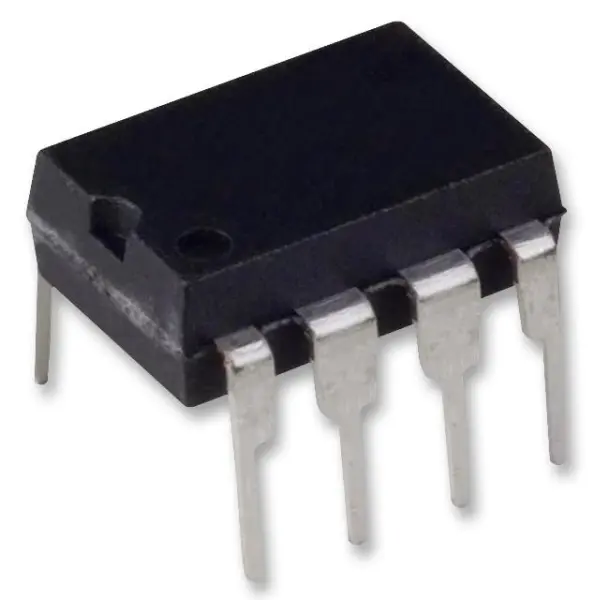
VISHAY 6N139 High Speed Optocoupler 100 kBaud DIP-8 5.3 kV
VISHAY 6N139 single-channel high-speed optocoupler, 100 kBaud, 5300 Vrms isolation, 8-pin DIP package for digital signal isolation.
VISHAY 6N139 High Speed Optocoupler is a single-channel device with a 100 kBaud data rate, designed for efficient and reliable signal isolation in digital circuits. It suits low-power logic systems, combining a low input current requirement with high-speed operation.
Overview
The 6N139 couples an LED with an integrated, high-gain photodiode Darlington detector. This design provides high common-mode transient immunity and a very high current transfer ratio (CTR). Electrical isolation is rated at 5300 Vrms, supporting safe and reliable operation in environments with significant potential differences between circuits.
Key Features
- Separate pins for the photodiode and output transistor stage
- TTL-compatible saturation voltages without sacrificing high-speed operation
- Direct access to the output transistor base terminal, allowing the gain-bandwidth product to be adjusted
- Standard 8-pin DIP (Dual In-line Package) for easy prototyping and PCB integration
Electrical Ratings
- Maximum forward current: 25 mA
- Collector-emitter voltage: 18 V
- Isolation voltage: 5300 Vrms
Dimensions and Weight
The product measures 3.3 (width) x 1.5 (depth) x 4.3 (height), with a weight of 1 gm.
Applications
- Communications & Networking: Isolates signal lines in modems, interfaces, and network equipment.
- Sensing & Instrumentation: Provides signal isolation in measurement devices, data acquisition systems, and sensor interfaces.
- Consumer Electronics: Implements isolation in power supplies, control circuits, and logic interfaces within electronic goods.
- General Logic Interfacing: Creates isolated links between CMOS, low-power TTL, and µC devices.
Choose the VISHAY 6N139 High Speed Optocoupler when you need single-channel, 100 kBaud signal isolation in an 8-pin DIP package for digital and logic interface circuits.
- Communications and networking equipment, including modems, interfaces, and network equipment
- Sensing and instrumentation, including measurement devices, data acquisition systems, and sensor interfaces
- Consumer electronics, including power supplies, control circuits, and logic interfaces
- General logic interfacing between CMOS, low-power TTL, and µC devices
- Channel: Single-channel
- Data Rate: 100 kBaud
- Isolation Voltage: 5300 Vrms
- Package: 8-pin DIP (Dual In-line Package)
- Maximum Forward Current: 25 mA
- Collector-Emitter Voltage: 18 V
- Special Feature: Separate photodiode and output transistor pins
- Special Feature: TTL-compatible saturation voltages
- Special Feature: Direct access to output transistor base terminal
- Special Feature: High common-mode transient immunity
- Special Feature: High current transfer ratio (CTR)
- Width: 3.3
- Depth: 1.5
- Height: 4.3
- Weight: 1 gm
Documents
Always follow local regulations and product guidance.
Free standard delivery on UK mainland orders. Express delivery options and international shipping available at checkout.
We offer a 30-day money-back guarantee on most products. For faulty items, contact us within 14 days for a replacement or refund.
View Full Delivery & Returns PolicySecure Transactions
We take the utmost care with your payment and personal details. Our website employs advanced encryption technology, including Secure Sockets Layer (SSL), to protect your information during transmission. You can verify a secure connection by looking for 'https' and a locked padlock in your browser.
Cookie Policy
Cookies enhance your shopping experience by keeping track of your basket and remembering you when you return. We also use banner advertising based on your browsing history to present products of potential interest.
Security Warning
Beware of phishing scams! We will never ask for personal details via email. If such information is required, we'll request you to contact us by phone. If you receive an email requesting sensitive information, do not respond and let us know immediately.
Recommended Products


Similar Products


You may like


