


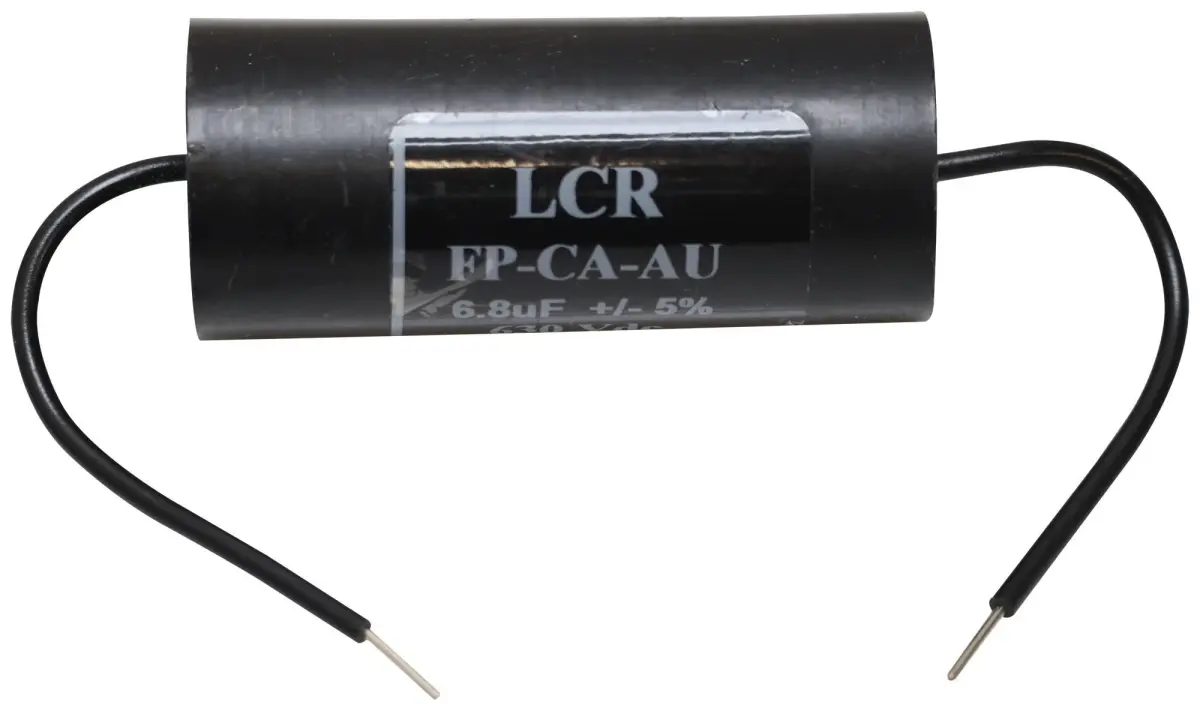
Ampohm FP-CA-AU Audio Series DC Film Capacitor 6.8 µF 630 V Axial
Ampohm FP-CA-AU Audio Series DC film capacitor, 6.8 µF, 630 V, polypropylene axial through-hole component for audio circuits.
The Ampohm FP-CA-AU Audio Series DC Film Capacitor is a 6.8 µF film capacitor rated for 630 V DC, designed for audio circuits where signal integrity is important. It has an axial-leaded format for through-hole mounting on printed circuit boards (PCBs).
The capacitor uses a metallised polypropylene (PP) dielectric, which is associated with low dielectric absorption and high insulation resistance. These characteristics are described as contributing to sonic clarity and minimal signal distortion in audio applications. The metallised film construction provides self-healing properties that support long-term reliability and lifespan.
Key Features
- Capacitance: 6.8 µF with a ±5% tolerance
- Rated DC Voltage: 630 V
- Dielectric Type: Metallised polypropylene (PP)
- Terminal Type: Axial leaded for through-hole mounting
- Operating temperature range: -40°C to 85°C
- Product Range: FP-CA-AU Audio Series
Physical Details
- Width: 3.3
- Depth: 1.5
- Height: 4.3
- Weight: 56 g
Applications
The capacitor is intended for crossover networks, amplifier coupling, and tone control stages in high-fidelity audio circuits. It is also suitable for professional audio equipment and high-end DIY audio projects. Choose the Ampohm FP-CA-AU Audio Series DC Film Capacitor when a 6.8 µF, 630 V axial film capacitor is required for audio circuit design.
- For crossover networks
- For amplifier coupling
- For tone control stages
- For high-fidelity audio circuits
- Dielectric Type: Metallised Polypropylene (PP)
- Capacitance: 6.8 µF
- Capacitance Tolerance: ±5%
- Rated DC Voltage: 630 V
- Mounting Style: Through Hole
- Terminal Type: Axial Leaded
- Operating Temperature Range: -40°C to 85°C
- Product Range: FP-CA-AU Audio Series
- Special Feature: Self-healing metallised film construction
- Weight: 56 g
- Width: 3.3
- Depth: 1.5
- Height: 4.3
Documents
Always follow local regulations and product guidance.
Free standard delivery on UK mainland orders. Express delivery options and international shipping available at checkout.
We offer a 30-day money-back guarantee on most products. For faulty items, contact us within 14 days for a replacement or refund.
View Full Delivery & Returns PolicySecure Transactions
We take the utmost care with your payment and personal details. Our website employs advanced encryption technology, including Secure Sockets Layer (SSL), to protect your information during transmission. You can verify a secure connection by looking for 'https' and a locked padlock in your browser.
Cookie Policy
Cookies enhance your shopping experience by keeping track of your basket and remembering you when you return. We also use banner advertising based on your browsing history to present products of potential interest.
Security Warning
Beware of phishing scams! We will never ask for personal details via email. If such information is required, we'll request you to contact us by phone. If you receive an email requesting sensitive information, do not respond and let us know immediately.
You may like


